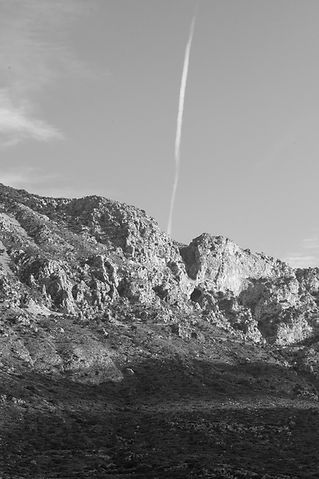
Ongoing research in the Asterousia mountains and Lassithi.
Project in partnership with the Knossos Research Centre and Photo Xenia Residency
U-po-ra-ki-ri-ja
The Minoan civilisation (2700 to 1200 B.C.E) existed for 1,500 years before suddenly disappearing without contemporary archaeologists being able to clearly establish the reason.The language and political organisation of this civilisation remain untranslatable and debated to this day.
With no tangible resources with which to grasp the history of their land, the Cretans invent stories and fabricate new myths, mixing folklore, scientific hypotheses and fiction to imagine the lives of their ancestors. By fantasising about an uncertain past, they sketch the outlines of utopias they desire in the present. Some speak of communal life and matriarchs, while others speak of an absolutely peaceful civilisation, without governors or fortifications, where daily life was devoted to art and the celebration of nature.
This work is based on Donna Haraway’s concept of ‘thick time’, a non-linear and non-chronological time, thought of as sedimentations, geological strata in which subterranean movements, back and forth trajectories are possible.
The project therefore takes the form of a speculative archaeology, looking for signs of these histories in the territory and the remanence of a few clues brought up from the depths. In particular, I’m interested in the materials that the Minoans used to build their objects and the survival of these materials in today’s Cretan landscape, trying to understand the past and present mystique surrounding their relationship with nature.
“Uporakirija” is the Linear B translation of what most closely resembles the word “mountain.” It actually refers to a place located at high altitude.